Towards sustainable urban sanitation: a capacity-building approach to wastewater mapping for small towns in India
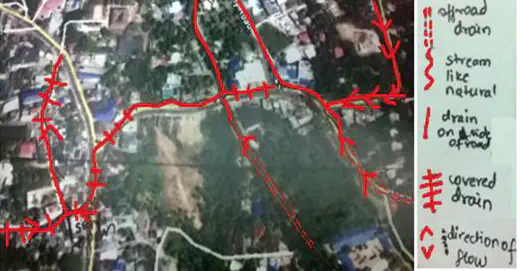 Image credit: Unsplash
Abstract
Decentralized technologies and city-based governance are being actively promoted for urban sanitation in low-income countries. At the same time, municipal agencies in developing countries have little technical or financial capacity for sanitation planning. This paper develops an approach to sanitation planning that leverages citizen engagement and fosters local capacities. It presents an empirical study from two small towns in India, where collaborations among the research team, local academics and students, and the municipal government, produced planning-oriented sanitary maps of each town. The maps were built upon a social and spatial understanding of the diverse sanitation practices that already exist, coupled with Google Earth and free GIS software. The ‘waste watersheds’ and ‘sanitation zones’ identified through the mapping process provide a basis on which sanitation interventions can be assessed and weighed, so that sustainable solutions can be prioritized. The paper identifies three features for system interventions. First, making local municipal government the locus of sanitation interventions; second, engaging community-based organizations and academic institutions to develop local capacity; and finally, recognizing the fragmented nature of cities by developing a socio-spatial approach to sanitation zoning.

Govind Gopakumar
Principal Investigator
Associate Professor and Chair in the Centre for Engineering in Society in the Gina Cody School of Engineering and Computer Science at Concordia University.