Abstract
The mobility turn offers a rich terrain for research to investigate the exercise of politics and power in movement through attention to associated meanings and practices. Despite this, the ontologies that can anchor this research within a historical imagination remains largely uncharted. Happily for us, coming from the opposite direction history, and especially the field of transport history, has grappled with mobilizing history in the face of the mobility turn. Several scholars have offered “usable past” as a mode of mobilizing mobility cultures of the past to inform policy actors about future choices. But is the ontology of a usable past appropriate for countries enmeshed within pre/post/colonial histories of displacement in their society and culture? Employing a case of automobilization in the city of Bengaluru in India, this paper sketches an exposition of the “displaced past” in sedimented residues that continues to live and contest the enterprise of automobility.
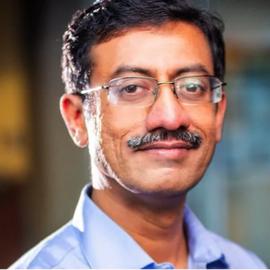
Govind Gopakumar
Principal Investigator
Associate Professor and Chair in the Centre for Engineering in Society in the Gina Cody School of Engineering and Computer Science at Concordia University.