Abstract
This book chapter presents some of the contentious issues related to cycling in India in the context of continuing motorization of the urban society. Cycling in Indian cities consists of two dominant groups; the low-income, everyday cyclists and the affluent, recreational cyclists. These user groups are not homogenous, but their social identities influence their mobility practices. In this paper, we unpack various issues related to practices of urban cycling by these two groups. Parallelly, we trace the evolution of cycling in Indian cities by exploring various urban transport plans and policies. We argue that affluent recreational cyclists have made cycling a more ‘visible' and ‘attractive’ activity in the city. Whether these emerging trends lead to a larger recognition of the plight of low-income everyday cyclists or the ‘invisible cyclists’ (Joshi & Joseph, 2014) is yet to be seen. Many pro-cycling initiatives are often subverted by either building inadequate infrastructure or proposing expensive cycle-sharing mechanisms, excluding the poor, everyday cyclists. By such subversion, the motorized modes of travel re-assert an appropriate road space as a microcosm of power structures prevalent in society. We finally discuss the issues related to the recognition of everyday cyclists as regular users of transport infrastructure in a city. Such recognition and inclusion could be a starting point for a possible ‘coalition’ between these groups to demand a better and safer environment for urban cycling in Indian cities.
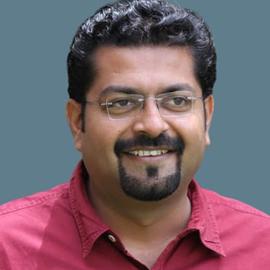

Jacob Baby
Doctoral Student
Jacob Baby is an urban planner and researcher. Before pursuing his doctoral program, Jacob was teaching & researching on Indian cities at CEPT University.